Showing posts with label Advice. Show all posts

Tuesday, March 22, 2011

Taiwanese Driver's License

Ok, so I just got my Taiwanese driver's license. The DL is for the regular heavy motorcycle (up to 250cc). It's very easy to get. The whole process was done in under two hours. All you need to bring in is your ARC and a couple of DL sized pictures. Or you could just take the pictures there. The ARC needs to be one year in length from approval date to expiry date. You don't need to have one year remaining, like for a cell contract, you just need a year-long ARC. 

Not too shabby.
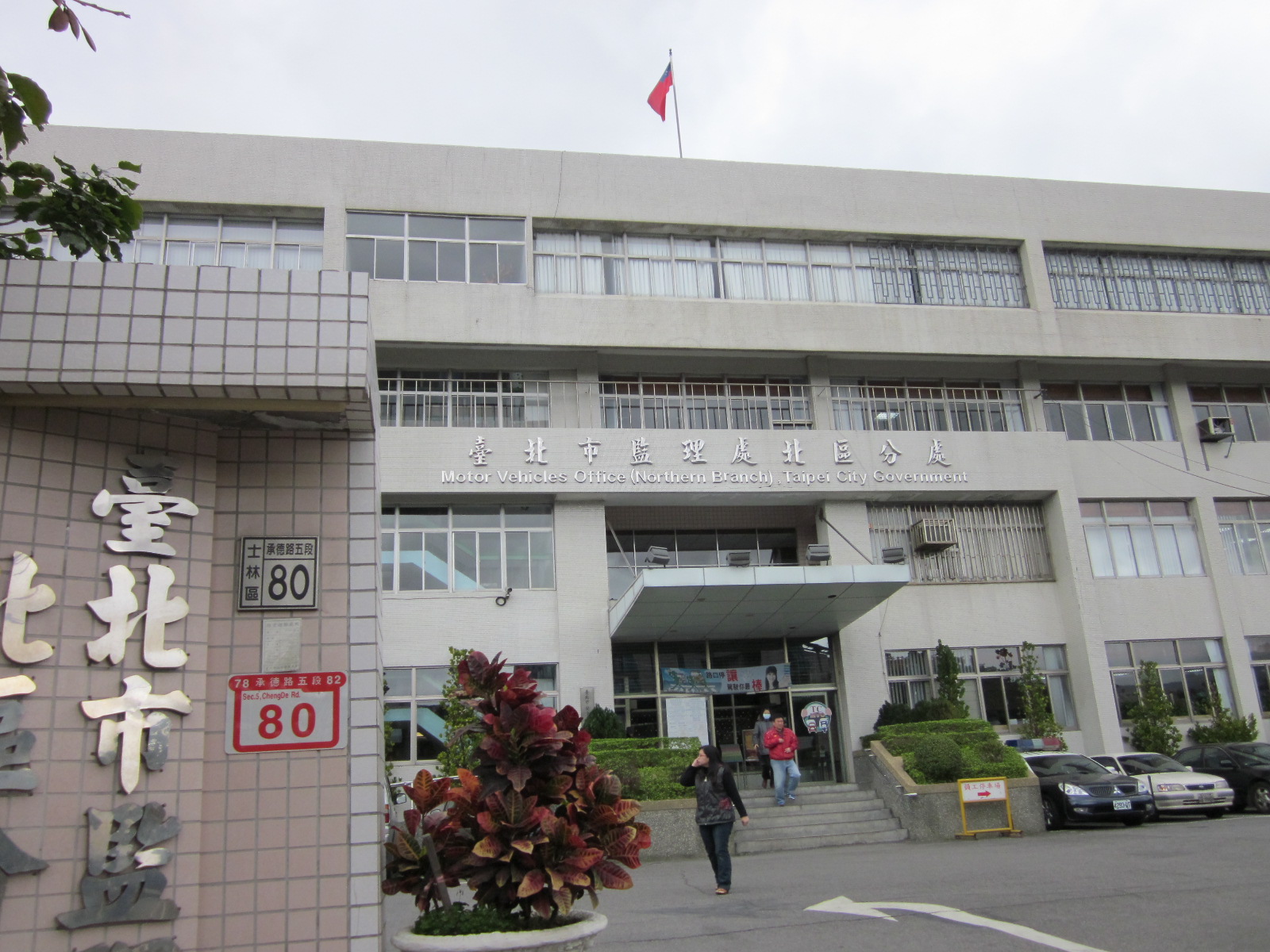
So this is where the magic happens. The Taipei Motor Vehicles Department, north branch. I came here with a friend, and I think you need to take a bus from the red line MRT, so you'll have to look it up. Here's the website: http://english.mvo.taipei.gov.tw/MP_117012.html 


85% to pass! "Panzaso!", as they say in Spanish (means, sliding on your stomach). 


I got an 85%, which is the bare minimum. Of course, I didn't realize there were practice computers in the lobby which are open all day until AFTER I took the real written test. Oh, well, I got lucky anyway. If you fail, you must wait a week before re-attempting the test. You can take an online practice test here (although, not all the questions on the real test are in the online test, as I found out): http://driversimtest.thb.gov.tw/DriverSimTest/mocks/index.do

See here for the website with some test answers (use Google translate or the Google Chrome browser): http://www.thb.gov.tw/TM/Menus/Menu03/Cai/Drivingtests.aspx


The written test is not so tough. You pretty much get it from driving back home. For the driving test, the most difficult part is the first obstacle: the stability test. Apparently this is new, and my friend said he could easily pass it now, but he doubts he would have passed it the first time he took the test back when he was 18. He said back then the passing rate was like 95%. Now it is much, much lower. By the way, when he took the test back in the day it was the first time he had even mounted a scooter, and he passed. I saw about seven people test while I was there. Two of them were older and clearly had been driving a while without a license. They passed no problem. The other five were 18 year-old new drivers. They all invariably failed. Immediately. Come back in seven days. 

Anyway, the stability test consists of navigating a long, fairly narrow lane at low speed without putting you feet on the ground or swerving the bike out of the narrow strip. It tests your balance at low speed. The way they make sure you use low speed is you can't complete the lane before seven seconds. If you complete it in six second, it means you went too fast. It's actually quite tough. See the tip below.
The dreaded stability test. Note that even though this poster claims to reveal to you the "trick", it doesn't actually tell you jack. Thanks for nothin' Taipei DMV. 

So here's the thing... the trick to the stability test is to start off with a bit of speed and then slow down right after you enter the test lane. The narrow lane used is right at the beginning of the obstacle course, so you can get a tiny 3-4 foot push off before you even enter it. It's a lot easier to start off stable at a medium speed and slow down than it is to try to keep low speed and maintain stability throughout.

After watching all those kids go down in flames, I kinda felt like going "what the hell" and just giving it a try, but I got a little antsy since I didn't wanna come back in seven days. So, I looked around for a place to practice. Turns out there's a wee lane leading up to the practice rink with some drainage grates that are about the exact same width as the narrow testing lane. I rode up and down these two or three times and counted to seven to get my technique down. When I got on the actual track, it was a piece of cake. The testing track is also open early mornings for practice, but I think it's crowded, and anyway we arrived too late for that.
Also, the stability test has a counter right the end of the narrow lane. You can look at this instead of counting to seven in your head to make sure you complete the obstacle after seven seconds.

Here's the track. You can see the lights in the background where you are supposed to make full stops. The narrow stability test track is in the foreground.

Instruction posters. 

There was a waiting area where your friends (or I guess your mom) are supposed to wait, but during the actual test, both my friend and I just walked right onto track. Taiwan ain't big on rules. 

Another beautiful day in Taiwan. 
Posted by Picasa

Although I went with my friend, everybody spoke English enough to get you through. The whole place was pretty much empty.  

The five steps are: 

  1. register and fill out paperwork and submit your ARC and photos. 
  2. do the physical: height weight, vision, hearing
  3. written test
  4. driving test
  5. watch a movie in Chinese. Even if you only speak English. The crashes in the video are gnarly enough for you to get the idea of "Don't do stupid **** and you will survive." 


So the whole experience was really easy. Cost under $500 and almost zero wait time. Compared to an American DMV it was a piece of cake. 

Time to go terrorize the streets!

Sunday, December 19, 2010

Visa Run to Hong Kong

I just completed my first visa run to Hong Kong!

It was a thoroughly exhausting experience. For anyone who doesn't know, when you go to a foreign country you have to have a visa which allows you to stay in the country for a certain period of time. Normally you go to the embassy closest to your city, however, since Taiwan is not officially it's own country they do not have embassies, but TECO offices. When I went to the TECO (Taiwan Economic and Cultural Office) in Los Angeles I got a beotchy lady who didn't want to give me a visa, but finally consented to give me a 60 day NO EXTENSIONS visitor visa. The visa will run you around $140 dollars American (more if you want to have your diploma authenticated or something). Some countries have more favorable visa rules. U.K citizens can stay in Taiwan for six months for free.  (Rico went to the office in San Francisco and got a really nice lady who gave him the much coveted 5 year multiple entry visitor's visa...grrr...Rico swears it was because he showed up literally a few minutes before they closed and, like anyone with government jobs, they want to fly out of there at 5pm and gave him everything he wanted to avoid a hassle. I, of course, being the organized person that I am, showed up bright and early. Folks, this is one example of the early bird not always catching the worm).

Normally you have to bring in a lot of paperwork such as your passport, letter of invitation from friend or family inviting you, job contract, etc. If you are going there to teach English, DO NOT SAY SO. They will deny your visa, expecting of course, that you will be working illegally until you get your work permit (which everyone does - it's even illegal to do a lesson demo without a work permit... which is obviously a necessity during an interview). When you go there, say you will be going for tourism purposes. You usually have to show your bank statement and proof of an outgoing flight. If you want a multiple entry permit try to explain that you want to tour Asia and want to use Taiwan as your home base because you have friends/family there. It may work, it may not. It didn't for me. If you go to Taiwan without a visitor visa you will be getting in with a 30 day visa exempt status (which is free), but you will likely have to convert to a visitor's visa in Taiwan or do a visa run (30 days is not much time to find a job and do the paperwork required for an Alien Resident Card).
------

So after I finally signed with my school it was apparent that there would not be enough time to do the paperwork so I had to book a round trip ticket to Hong Kong. (Rico could not go because his paperwork is being processed and he cannot leave the country.) My flight left at 6:15 am so we had to spend the night at the airport (otherwise there would be no public transportation to get there since the buses don't run until about 6am). I had just finished my Christmas show with my students, who did wonderfully :), so I raced home, we left for the airport about 10pm and got there about 12am. We spent a very cold night in some very uncomfortable chairs in a very noisy (construction going on, of course, how very Taiwan) terminal. There was no heat and we were freezing. It all ended all right. I got on my plane, had a 5 hour layover in Hong Kong, and managed to get back with a 30 day visa exempt permit in my passport by 4pm the next day.

Of course I slept about 12 hours that night but it's all over and I hope I never have to do it again. The importance of a visa run is this: if you overstay your visa, even by one day, even by a few hours you get a huge fine and sometimes get banned from going into that country for a period of time, usually one year. Never, ever overstay a visa or you will be monumentally screwed. Usually in Taiwan visa runs can be pretty inexpensive such as $60 each way. I had the misfortune of having my visa expire at an extremely bad time (right before Christmas), so it was more expensive.

Some people don't know this, but when you do a visa run you don't actually have to go through immigration and customs in the city you land in if you are doing a simple leave and return in the same day. Some people do this, thinking they need the stamp, but when you land in Taipei, they don't really care where you came from. Make sure though, that you pick up both boarding passes (departure and return) at the airport in Taiwan before you leave for wherever you are going. Make sure the airline gives you both when you check in for your first flight. If you don't have the return boarding pass when you get into you visa run destination, you will have to exit the gate area to get your return pass at the airlines' ticket counters, then you will have to go through security and immigration and all that (it might be possible to get your boarding pass from the ticket counter near the boarding gate, but I wouldn't risk it). For the same reason, make sure your arrival and return flight are in the same terminal (usually you only need to do this if your destination airport is really big and you are returning with a different airline). Of course, it's no problem to go through customs and immigration at your  destination, but it can just be a hassle, and, if anything goes wrong and it takes too long and your return flight comes right on the heels of your arrival flight, you could miss your return flight. When I got back to Taipei, I was a bit scared thinking I needed to show an outgoing flight to get the visa exempt permit, but I just put the flight number from my Hong Kong flight and no questions were asked.

This experience was grueling and exhausting, but not that bad. I'm glad I waited for the job I did because it is a really good job for someone with no experience. I got the hours I wanted, the kids and staff are great, and I get an entire month (30 days, not the American 20 days) of paid vacation a year plus all national holidays and typhoon days! Awesome.

Peace. Out.

Saturday, December 4, 2010

Job Hunting

Hey Everyone!

So we haven't really blogged in awhile because we've been so busy trying to find good jobs. The job market is pretty tough in Taiwan lately. There's a lot more recent grads coming to Asia to try and find jobs now. We came during off season too, so there wasn't a whole lot going on, but starting at the beginning of this month there were a lot more jobs as people are quitting to go home for Christmas and such.

Family Life in Taiwan
Jobs have been decreasing because Taiwan has a declining birth rate. People usually just have one child, and there are several reasons for this including: more women having careers, children being expensive, and people generally seem to be replacing children with dogs. Everyone has dogs and there are a ton of animal hospitals/vets all over the place. We're used to this in Socal but people dress up their dogs and push them around in strollers (not rat dogs, I think they are pomeranians?). Personally, I think people have stopped having kids just because it's so inconvenient to have a child and Taiwan is a culture of convenience. In Socal, moms drive big SUV's to pick up their children from school (usually within a mile of their home). In Taiwan parents put their child in a seat on their bicycle and cycle home. They also have smaller strollers (because how exactly do you navigate the crowded streets and MRTs in a gigantic American-size stroller? You can't), smaller diaper bags, etc. When I first marveled at how small the diaper bags moms in Taiwan carried are and mused how they could fit everything a baby needed in it Rico summed it up best when he said people just carry around a bunch of crap they don't need. Very true. (Also normal to see a man carrying a purse! Satchel I suppose, since people don't have cars to put things in.)

Children in Taiwan go to school ALL DAY. They usually don't come home until 9-11pm at night. Younger children of course go home by maybe 6pm. Usually the kindies are more like glorified child care for the working parent.

Back to Jobs
Basically the jobs are separated into teaching English at a yo-yo ban (preschool class generally age 2-3yrs old), kindy (kindergarten) or a buxiban (cram school in afternoon or evenings for kids anywhere from 7-high school). Kindies and yo yo bans usually run anywhere from 8am-5pm including a 2 hr break (unpaid) for the teacher while the students eat lunch and nap. Buxiban teachers generally teach in afternoons and evenings.

It is illegal for foreigners to teach kids under the age of 7 in Taiwan. There are raids by the police and people do get deported. That being said, foreign teachers hired to teach these kids is widely practiced and it is best to have your escape route thoroughly planned. If you are caught you are the art/drama/anything-but-English teacher. The government has been flip flopping on this law, but it is currently illegal for a foreigner to teach English to under 7s. They call it a 'dilution of culture' and believe the child should only be learning Chinese. Personally I think it makes more sense to have a child learn both at once especially since the mind is so receptive to learning language in the early years but... the government doesn't think so. It is considered a "gray" area. Apparently, there's no law that says you get deported for teaching young kids, so, usually, the official reason that kindy teachers get deported is that the address they are working at is not the address on their work permit. Since it is illegal to teach, the employer usually has to get the work permit for the teacher by saying the teacher is teaching somewhere they actually aren't (This is very very common). It is also common for an employer to lie about how many hours a teacher is working and for employers to ask for illegal things in a contract (require the teacher to pay a penalty for quitting or deduct a deposit from the first paycheck so the teacher completes contract). Sometimes the teacher may not actually know what is says in the contract or ARC because all legal documents are in Chinese. Technically, you are not supposed to teach before you actually get a working permit or do any demos in front of actual students.  However, employers often have you start before your work permit is finalized and demos in front of  a real class are required for obvious reasons. Some employers have you come in for multiple "interviews" with long demos... we suspect that prospective teachers are actually just covering for missing employees.

The demo

A basic requirement to any interview is a teaching demonstration of about 15-20 minutes. In this case it is not really necessary the children learn anything; it's mostly just to see how the teacher interacts with the class and and to gauge their classroom management skills. Sometimes the teacher prepares their own demo (which I prefer as long as they tell me how many students, age level, and English level... which they don't always do), or they provide the materials. Essential aspects of the demo are introducing yourself, getting the children to speak in complete sentences, and keeping them happy and involved in the class. For younger kids, the more you are like a dancing clown, the more the school will love you. Bribes with stickers or games with hammers and sticky balls are always well received.

The sticky balls are used for a variety of games and, when thrown, stick to a desk or whiteboard really well. The hammers, well you use those to bang things and they squeak, so kids love bashing things and making noise! Always a crowd-pleaser!


Hiring Practices
They do not have the same kind of laws regarding discrimination in Taiwan as we do in the States so it is very common to see ads looking for 'female' 'only under 35 yrs old' 'North American accent prefered' 'no ABC's' (American born Chinese), etc. And the always unspoken 'white people' preferred.

-They do not want someone who looks Chinese teaching English because parents want a white person to teach, otherwise they think their children are not getting the full "Western experience." Since parents give the money they have the say, which is problematic to say the least. However, some places prefer ABC's or at least someone with basic Chinese ability for the really tiny beginner kids.

Working Conditions

Working conditions vary greatly. A big problem is getting roped into a lot of unpaid work such as parent teacher meetings, makeup classes, school performances, graduations, speeches, and meetings. Recruiting is also very big if you work at a chain school. Most schools I have been to have very nice facilities with really friendly staff and usually a Chinese co-teacher for the smaller kids.

I haven't made up my mind yet but I'm looking seriously at two schools I like: Jump Start and Shane English. Rico has gotten a buxiban job close to the MRT which he's starting to get the hang of (The first few days were pretty brutal I hear ;) ). We will probably have different teaching schedules which sucks, but hopefully we will both enjoy our jobs and it will be good experience to put on our resumes! The schools I am considering have great staff and good curriculum so I am sure I will have a great time doing what I like best - working with kids.

 Peace. Out.

Wednesday, November 10, 2010

Adjusting to Taiwan

Initial observations about Taiwan: 3 week mark

1. Transportation is pretty good. The MRT opened about 10 years ago and moving around by subway or bus definitely means you don't need a car or scooter anymore. That being said, actually going anywhere takes a LONG TIME. Going to Costco is easily an hour each way when you figure in walking to the MRT, MRT, bus, and then walking there. And Taiwan isn't all that big. Gone are the days when we could hop in my car and be there in five minutes. We miss our cars :) The American way is more convenient because we have room to store all the cars and they are more affordable to buy. Taipei is much more polluted than Socal is. (We have much more stringent measures on filtering gas). They however, are much more diligent about recycling and garbage (blog post to come).

2. food here is cheap, convenient, and good. I didn't realize that eating at home would be a luxury though. All food is expensive in Taipei if you just buy it to make yourself. We really like the the Taiwanese food but eating it for every meal is too tiring so we have decided to just make breakfast, have snacks and usually eat out for dinner. This seems to be working for us. However things like good bread (they call it morning toast even when it's not toasted) and lunch meat are hard to find, lunch meat being impossible. Beef is from the U.S. and prohibitively expensive.

3. Safety. It is really really safe in Taipei in terms of violent crime. You have a *much* better chance of being accidentally run over crossing the street (pedestrians don't unofficially have the right of way) than you would being robbed or murdered (watch out for pickpockets though). Traffic is crazy, but actually I would expect to see a lot more accidents and I haven't. I haven't seen a single one and I cringe every time I am on a bus that is careening wildly and laying on its horn like it's the Knight Bus (and things don't magically jump out of the way). At all the MRT's there is a special area for female passengers to wait at night with a camera on the area and a security person watching. I have heard stuff about people getting felt up or recording in women's restrooms but that's it. All scooterists wear helmets, however children just hang on which I don't really feel is very safe. Car seats aren't totally used and it's common to see a very young child in the front passenger seat of a car holding on the dashboard like they are on a roller coaster ride (which in Taipei traffic is kind of accurate).

4. Much more open about bodily functions. The sound of someone hocking a loogie is something (no matter how long I am here) I will NEVER get used to. Whenever I hear it (esp. from a woman!) I cannot stop the shiver of revulsion going down my spine. It's also normal to burp, pass gas, or see someone picking one's nose. Just different perceptions of gross here, I guess. There's also less privacy going to the restroom. Although the stall doors do go almost down to the floor unlike the U.S. there is no bend when you go in the restroom so you can walk by and see people at the urinal or coming out of the stall. It's also the norm to have a common place in the middle for men and women to wash hands together. The toilets are predominately squat in public facilities though there is usually a disabled/family toilet which is Western. You should always roll up your pants (floors can be wet, usually due to the toilet maid swishing her mop about but you don't want to risk it), and hand off your purse (sometimes no hooks). Balancing, reaching for tissues, etc all takes practice. I do recommend disrobing from the waist down (esp. for girls) when attempting a squat for the first time. Most of the restrooms have all been clean that I have seen though sometimes there will be no tissue paper so you have to bring your own and you can't flush it. Homes and nicer restaurants all have Western toilets.

5. It's normal to push, cut in line, etc. Very, very different. Not good if you are passive. However if you are more aggressive like me, you fit right in! (J/K I always worry that I'm being rude by taking my turn because so many people will jump in front of you at the slightest hesitation (or even no hesitation). Just the other day at the coffee shop I was patiently waiting and 2 people cut in front of me. I don't know how to say "Excuse me, I was here first" in Chinese yet.

6. Clothes and Shoes: So cheap and you can find them anywhere! There are numerous stalls lining the street, shops, and night markets where good clothes can be found cheaply. If you are taller I don't know if they would fit though. Taiwanese girls and even women are very stylish and it's not common to see people slouching about in jeans and hoodies like me. (Hoodies are virtually non-existent and everyone just uses umbrellas when it rains.)

7. Weather: I love the rainy weather. Growing up in Socal it NEVER rained so it's a good change. The hot/humid weather is really uncomfortable. The last few days have been sunny and relatively dry so that's nice too.

8. The Language barrier: Not too bad actually. It's very possible to get by in Taipei speaking almost no Chinese because most of the signs are in English. I keep these pictures


on my camera and if I need to go I just point to them and although the locals laugh at the waiguoren (foreigner) they are always happy to point me in the right direction. (Haven't been able to master the tones in Chinese so I can't speak at all! Not a good language for a tone-deaf person to try to learn) When I order food I usually point a something, give them some money, and they give me some food and I go on my way. If it's something I won't eat usually Rico will eat it so that works out. 


Things I wish I had brought with me:

Ok when packing I looked at all the lists and I mostly brought the right things, however, there's always those things you really REALLY want when you get there and realize it just doesn't exist here.

1. caladryl (the anti-itch stuff here is menthol which reminds me of being sick and is very greasy)


2. real cake (all cake/cookies here are really dry and crumbly, I would kill for real, moist, sweet cake)
3. after itch pen (impossible to find here!!)

4. witch hazel (so good for so many things)

5. An american oven/washer/dryer/my car (I can dream)
6. Hawaiin punch packets
7. A milky way   (not as good a selection of american candy as I was led to believe. M&Ms, twix, snickers, skittles, ferrero rocher, mentos (for some reason really popular here) can be readily found but are about $1 (U.S.) each).
8. electric blanket
9. Gatorade (they don't really have an equivalent. All the fruit juices here taste like liquefied lollipops (unusual because normally they don't like really sweet things I thought, just in juice))
10. a good mop
11. Nanu's threading: Taiwan has threading for eyebrows but it is NOT like Indian threading. For one they mostly use tweezers which means my brows grow back in about 2 days, and they do it rounded (how Chinese like it) with absolutely no arch no matter how hard you try to explain to them. I am incapable of plucking my own eyebrows so I'm kind of screwed. They also don't really wax here because less hair than Westerners.
...to be continued...